

Antalya Airport to Cleopatra Beach Alanya transfer
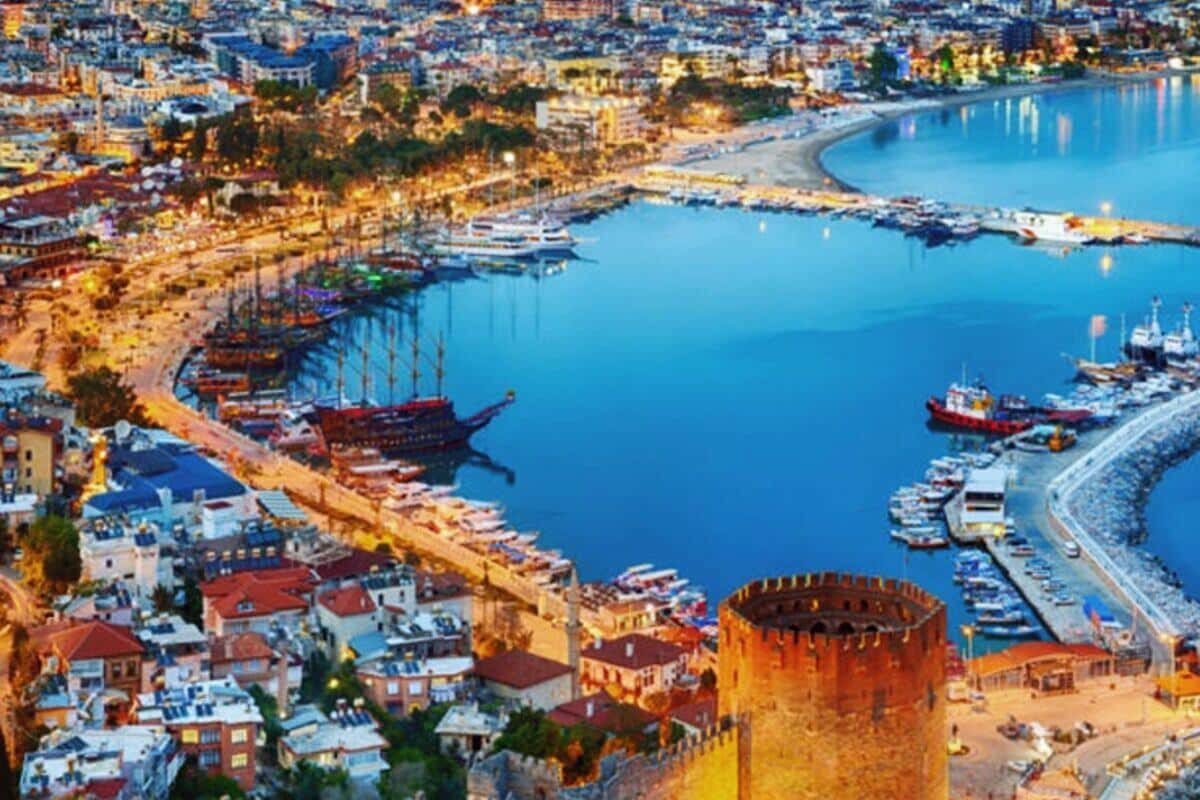
Cleopatra Beach is Alanya's own beach, about two kilometres of fine, pale sand running west from the foot of the castle rock. At the eastern end, sheltered by the headland, the water shelves gently and families tend to settle there; the western half is wider and easier to find space on. A promenade of cafes, showers and changing cabins follows the whole length, rows of sunbeds go out through the season, and the town starts a minute behind the sand. Damlataş cave and the harbour sit at the castle end, so a swim here is rarely the only thing people do.
Staying anywhere in Alanya — Konaklı, Türkler, Kestel, Mahmutlar — this is a fifteen to twenty-five minute run along the D400 and back whenever you like. From Side and Kumköy it is about 60 km east, roughly an hour, a comfortable morning out; from Okurcalar about 40 minutes, from Belek an hour and twenty, from Lara an hour and a half. Kemer is the one to rule out, since the road goes back through Antalya first: two and a half hours each way. A coach sets your departure and your return; a car lets you swim, climb to the castle and eat at the harbour in your own order.
Landing and going straight to the sand is normal here, because the hotels along this strip are what most people book: 125 km east on the D400, about an hour and 45 minutes, with the last stretch through Alanya itself. Your driver waits in the arrivals hall with a name sign and follows the flight in. After a late landing the swim usually waits for the morning, and the promenade is the slow part on summer evenings.
Visiting Cleopatra Beach Alanya
The end you are set down at is the visit, because two kilometres is further than anyone walks twice in swimming things. The eastern corner under the rock is where families gather and where the water stays shallowest; the western half is broader and still has room for a towel at noon in August. Walking the whole length at the waterline takes a little under half an hour, and the loose dry sand higher up makes it longer than that. Morning or evening is what most people give this beach, with the streets behind it absorbing the hours in the middle.
The sand is fine and pale, and by the middle of the day the dry strip of it is too hot to cross barefoot, so something on your feet as far as the water saves the last ten metres. Below the surface it is the same even sand, with no stones and no step down: at the sheltered corner you can wade a long way before it reaches your shoulders, while further west the bottom takes on a slope and an afternoon breeze puts a chop on the surface that children notice at once. Which half you choose is the only real decision the beach asks of you.
A town standing directly behind the sand changes the transfer. This is the one beach on this coast where the hour you leave does not have to be settled in advance: a car can come for you late, and until it does you are never more than a minute from paving. The cave sits at the castle end with the harbour beyond it, so a swim can be bracketed by something to look at without any further driving. Do say which corner of the two kilometres you want the car at, though, because a driver at the wrong one costs a long crossing in beach clothes.
- Flip-flops as far as the waterline are worth the trouble, because the dry sand at midday shortens anybody's walk.
- The eastern corner by the rock is the shallow, sheltered half, while the western half is where there is still space to sit in August.
- A breeze on the open western stretch is normal in the afternoon, so anyone who wants flat water swims early.
- If the cave and the harbour are also on the list, do them while the sand is at its hottest and swim on either side of that.